Roof waterproofing · South Florida
Sealant vs. Coating: What Your Roof Actually Needs
Learn how roof sealants and coatings differ, where each may fit, and why roof condition, material compatibility, preparation, and an inspection matter in South Florida.
October 13, 202610 min readby Ed Roofing Services
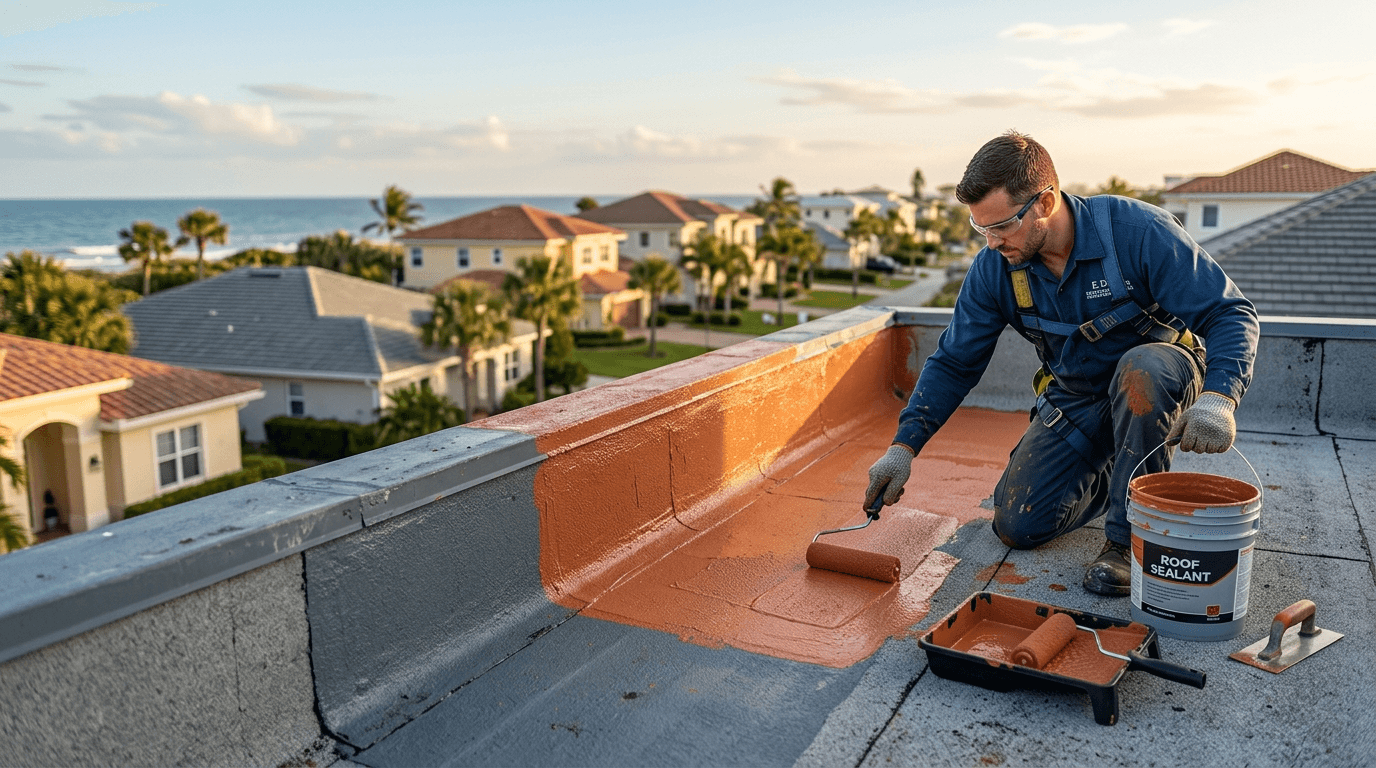
A roof waterproofing sealant fills gaps, cracks, and seams using a caulking gun or trowel on specific areas, while a roof coating is applied across larger roof surfaces using rollers, brushes, or spray equipment.
The distinction matters because these products solve different roofing problems.
Sealants target localized failures, including flashing separations, fastener penetrations, vent boots, and certain roof seams. They are applied to specific areas where water may enter.
Roof coatings are designed to protect compatible roof surfaces by creating a continuous protective layer over existing roofing materials.
For South Florida homeowners, understanding the difference can help prevent unnecessary repairs and expenses.
If you notice a leak around a pipe boot or flashing seam, a compatible sealant may be appropriate. If your roof shows widespread surface deterioration but remains structurally sound, a professional roof coating or rejuvenation assessment may be worth considering.
However, neither sealants nor coatings can repair rotted decking, structural damage, or a failing roof system.
Silicone, Polyurethane & Acrylic: Which Works in South Florida?
Silicone Roof Sealants
Silicone products offer excellent UV resistance, flexibility, and water resistance when properly selected and installed.
They are commonly used on compatible low-slope roofing systems, roof penetrations, and areas exposed to prolonged moisture.
South Florida's strong sunlight and frequent rainfall make UV and water resistance important considerations.
Polyurethane Roof Sealants
Polyurethane sealants are commonly used for flashing, joints, and other compatible roofing details.
They can provide strong adhesion and flexibility. Certain formulations are paintable, making them useful for specific roof repairs.
However, product compatibility and UV exposure must be considered before installation.
Acrylic Roof Coatings and Sealants
Acrylic products are often water-based and may offer reflective properties that help reduce roof surface temperatures.
They are generally best suited to compatible roofing surfaces with proper drainage.
Many acrylic coatings are not recommended for prolonged ponding water.
Choosing the Right Product
- Silicone: Often suitable for compatible low-slope roofing and moisture-exposed details.
- Polyurethane: Useful for selected flashing, joints, and repair applications.
- Acrylic: Often suitable for compatible, well-drained roof surfaces where reflectivity is beneficial.
The best product depends on roof material, condition, drainage, manufacturer specifications, and the type of damage.
E.D. Roofing Services helps South Florida property owners evaluate roof waterproofing and repair options based on their roof's condition.
Application, Curing & Temperature: Important Considerations
Roof sealants must be applied according to the manufacturer's instructions to achieve proper adhesion and durability.
South Florida's heat, humidity, and frequent afternoon thunderstorms can create challenges during roof waterproofing projects.
Temperature and Weather
Extreme roof surface temperatures may affect application and curing.
Some sealants require dry surfaces, while others are designed for particular moisture conditions. The acceptable temperature range and curing time vary by product.
Contractors should check manufacturer specifications and local weather conditions before starting work.
Surface Preparation
Proper preparation is essential for long-lasting results.
Roof surfaces may need to be:
- Cleaned of dirt and debris
- Cleared of loose or deteriorated materials
- Inspected for moisture and damage
- Prepared with an appropriate primer when required
Applying sealant over damaged, contaminated, or incompatible materials can cause premature failure.
Application Thickness
Sealants must be applied at the appropriate thickness and joint dimensions.
Excessively thin applications may fail under movement, while overly thick applications can create curing problems with certain products.
Professional installation helps ensure that the selected material is compatible with the roof and applied correctly.
When Roof Sealant Works—and When It Doesn't
Roof sealants are most effective when the problem involves a localized opening, seam, or penetration and the surrounding roof materials remain in good condition.
Potential applications include:
- Certain flashing separations
- Roof penetrations
- Compatible metal roof fastener details
- Small defects in suitable roofing membranes
- Selected joints and seams
However, not every leak should be repaired with sealant alone.
When Sealant Is Not Enough
Sealants cannot properly resolve problems involving:
- Rotted roof decking
- Structural deterioration
- Extensive roof membrane damage
- Widespread shingle failure
- Serious drainage problems
- Multiple recurring roof leaks
A roof that holds standing water may require drainage improvements or additional corrective work.
Likewise, an aging roof with widespread damage may require substantial repairs or replacement.
The Importance of Roof Inspections
Before applying waterproofing materials, a professional roofing inspection can help identify the underlying cause of leaks.
An inspection should evaluate roofing materials, flashing, penetrations, drainage, and visible signs of structural deterioration.
E.D. Roofing Services provides roof repair, waterproofing, and roof rejuvenation services throughout South Florida.
The goal is to identify a suitable solution rather than applying a temporary patch to a larger problem.
DIY vs. Professional Roof Waterproofing
Homeowners sometimes consider applying roof sealant themselves to address minor leaks.
Although roofing sealants are available at hardware stores, identifying the actual source of a leak can be difficult.
Water may enter through one location and travel along roofing materials before becoming visible inside a building.
This makes professional diagnosis important.
DIY Roofing Considerations
Small repairs may appear straightforward, but working on a roof involves serious fall hazards and risks of damaging roofing materials.
Using an incompatible product can also make future repairs more difficult.
For these reasons, homeowners should consider professional assistance rather than climbing onto roofs or attempting unfamiliar repairs.
Professional Roof Waterproofing
Professional roofing contractors can evaluate the roof, identify potential leak sources, and recommend appropriate materials.
Professional services may include:
- Roof leak inspections
- Flashing repairs
- Roof waterproofing
- Roof sealant application
- Roof coating assessments
- Roof maintenance
- Roof rejuvenation evaluations
The cost of professional waterproofing depends on the roof type, accessibility, extent of damage, preparation requirements, and materials selected.
An inspection and written estimate are the best ways to understand the appropriate scope and expected cost.
Roof Repair vs. Roof Rejuvenation vs. Replacement
Not every aging roof requires complete replacement.
Depending on the roof's condition, property owners may have several options.
Roof Repair
Roof repairs address specific problems such as damaged roofing materials, flashing defects, and leaks.
Repairs are often appropriate when the remaining roof system is in serviceable condition.
Roof Rejuvenation
Roof rejuvenation is intended to help maintain or extend the useful life of qualifying roofing systems.
E.D. Roofing Services specializes in roof rejuvenation as one of its primary services.
However, not every roof qualifies. A professional assessment is necessary to determine whether rejuvenation is appropriate.
Roof Replacement
Roof replacement may be necessary when roofing materials have reached the end of their useful life or when deterioration is too extensive for effective repairs.
Structural problems and widespread failures should be evaluated before considering surface treatments.
How to Choose the Right Waterproofing Solution
The first step is understanding the condition of your roof.
A qualified roofing professional can assess visible deterioration, potential leak sources, drainage, and the suitability of different waterproofing materials.
The right approach depends on:
- Roof age and condition
- Roofing material
- Existing damage
- Drainage performance
- Weather exposure
- Product compatibility
- Long-term maintenance needs
A sealant may address a localized defect, while a coating may protect a larger compatible surface.
Roof rejuvenation may be appropriate for certain aging roofs, while more extensive deterioration may require repair or replacement.
Protect Your Roof With E.D. Roofing Services
South Florida roofs face intense sunlight, heavy rainfall, humidity, and seasonal storms.
Choosing the right waterproofing solution can help protect your property and reduce the risk of recurring leaks.
E.D. Roofing Services provides roof rejuvenation, roof repair, waterproofing, fascia and wood replacement, and residential and commercial roofing services.
We serve Fort Lauderdale, Pembroke Pines, Miami, and surrounding South Florida communities.
Contact E.D. Roofing Services today to request a professional roofing inspection or estimate.
Want the same read on your roof? Book the free inspection — same crews, same photo-documented report, same honest-scope promise.
Or send a photo and a short description and we'll come back with the closest match from a recent inspection.